Prabowo Government Gets Poor Ratings from 66% of Surveyed Professionals
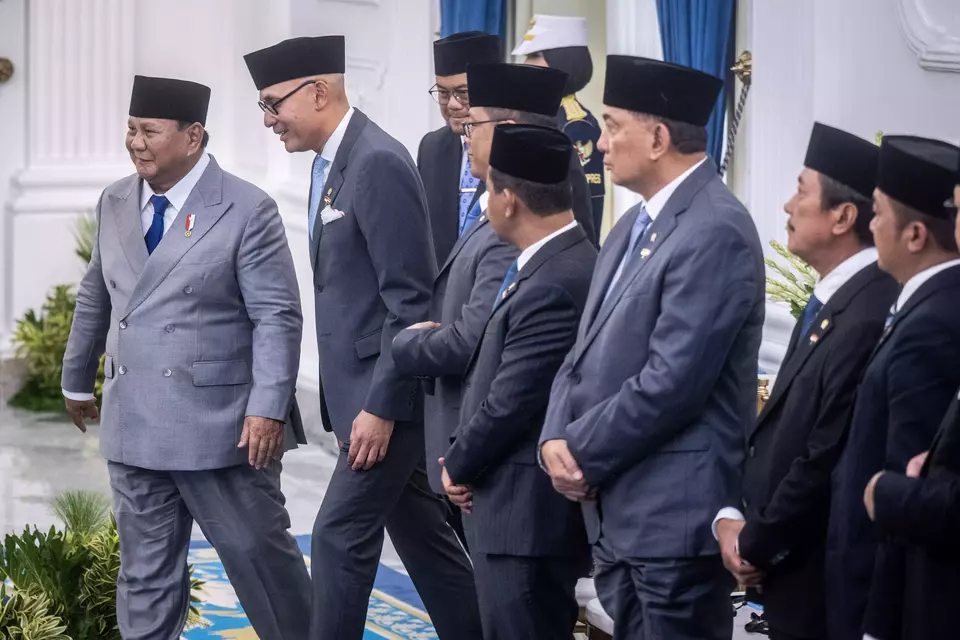
A majority of professionals surveyed by research firm Trias Politika Strategis expressed dissatisfaction with President Prabowo Subianto’s administration, particularly over employment opportunities, economic conditions, and purchasing power, according to findings released Tuesday to mark his second anniversary in office.
The survey, conducted from Sept. 29 to Oct. 14, involved 100 respondents from professional backgrounds, including journalists, activists, businesspeople, community and religious leaders, nongovernmental organization representatives, political and economic analysts, politicians and academics.
According to the findings, 66% of respondents rated the government’s overall performance as poor or very poor.
Trias Politika Strategis Executive Director Agung Baskoro attributed the negative assessments partly to differences between macroeconomic assumptions in the state budget and actual economic conditions.
“Dissatisfaction among experts has been driven by several macroeconomic assumptions falling short of the targets set in the state budget. For example, the US dollar exchange rate was set at Rp 17,600 in the budget, but in reality it has exceeded Rp 18,000,” Agung said during a presentation in Jakarta.
He argued that the widening gap between budget assumptions and economic conditions had contributed to weakening household purchasing power and increasing difficulties in finding employment.
Jobs and Purchasing Power Draw Strongest Criticism
Employment emerged as the most negatively assessed policy area, with 76% of respondents rating the government’s performance poorly.
Economic conditions and household purchasing power followed closely, receiving negative assessments from 73% of respondents.
Meanwhile, 62% expressed dissatisfaction with the government’s performance on legal affairs, while the same proportion gave negative ratings to democracy and human rights.
The survey also identified concerns about government transparency and responsiveness to criticism.
A total of 69% of respondents rated the administration’s openness to criticism as poor.
On the implementation of campaign promises, 44% believed that major government programs had made very limited progress or had not been implemented at all.
Agung also called for tighter oversight and improvements to Prabowo’s flagship Free Nutritious Meals program, known locally as MBG.
He cited food poisoning incidents, management shortcomings and inadequate operational capacity at some meal preparation facilities as problems requiring government attention.
“Furthermore, corruption remains a fundamental problem undermining the effectiveness of various flagship government programs,” Agung said.
Political Concerns and Recommendations
The survey also examined respondents’ views on several political and institutional issues.
According to the findings, 58% believed that controversy surrounding Vice President Gibran Rakabuming Raka’s educational qualifications had weakened public confidence in the government.
The figure reflects respondents’ perceptions of the controversy and does not establish any wrongdoing concerning the vice president’s qualifications.
Separately, 56% supported eliminating the presidential nomination threshold, which determines the level of political party support required to nominate a presidential candidate.
Despite the critical findings, Agung said the Prabowo administration still had considerable opportunities to improve its performance during the remaining three years of its term.
He urged the government to strengthen public communication, address economic challenges and consistently enforce anti-corruption laws.
Asked to identify priorities for the president’s remaining term, 29% of respondents emphasized better public communication, greater responsiveness to public aspirations and the adoption of evidence-based policymaking.
Another 24% prioritized improvements in governance, the legal system and democracy, while 17% called for a review of flagship programs, including Free Nutritious Meals and the Red and White Village Cooperatives initiative.
Terbit di Jakarta Globe