Indonesian parties weigh new election rules that could narrow 2029 presidential field
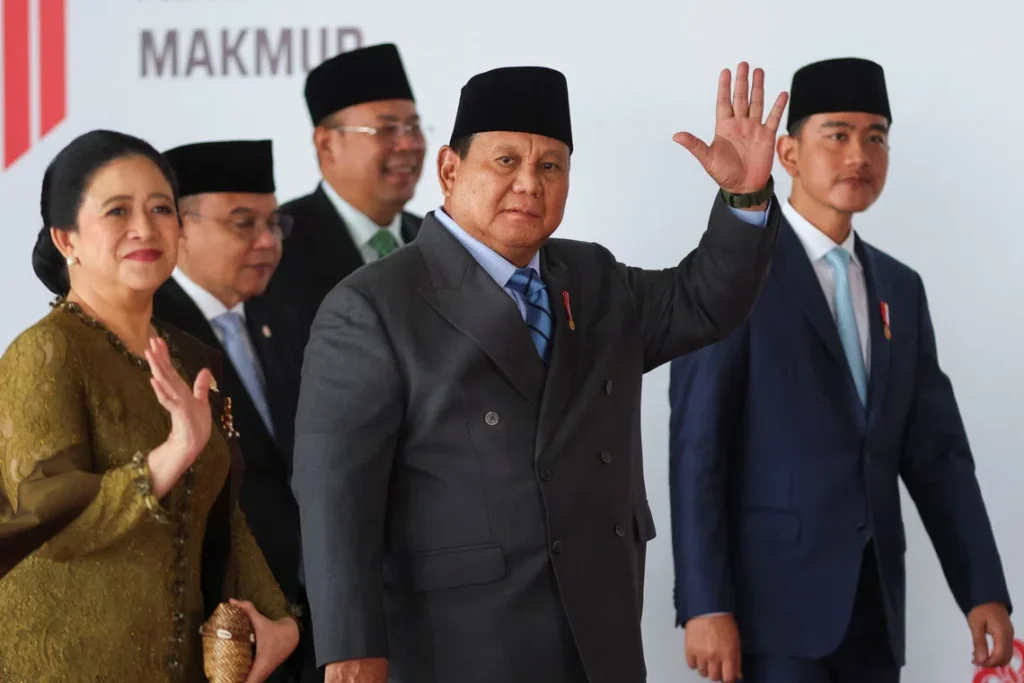
Indonesia’s next general election is more than two years away, but political parties are already locking horns over key rules governing presidential nominations that may threaten to shut out independent contenders.
As MPs prepare to amend the election law ahead of the 2029 polls, the debate has reignited tensions over political access just months after the Constitutional Court scrapped the previous threshold.
Amid the debate, NasDem Party chairman Surya Paloh on Sept 19 welcomed the idea, saying he had heard of plans to require presidential tickets to be backed by at least two parliamentary factions.
“In my view, that is good. It is the same, really. Two factions, if the parliamentary threshold is high, means the vote is high, too,” he told reporters in Jakarta.
In January 2025, the Constitutional Court scrapped the presidential nomination threshold. With the decision, a party or coalition fielding a ticket is no longer required to hold 20 per cent of parliamentary seats or win 25 per cent of the vote at the previous legislative election.
The previous threshold was a bar high enough that candidates almost always needed two or three parties backing them.
The Straits Times understands that earlier discussions for the new requirement went further, with the ruling Gerindra party even suggesting that a ticket require the backing of three factions. Sufmi Dasco Ahmad, who runs Gerinda’s day-to-day affairs, did not respond to queries.
Each faction in Parliament represents a party that cleared the 4 per cent parliamentary threshold at the 2024 legislative election. Of the 18 national parties that contested that election, only eight made the cut. The other 10 have no seats.
Under a two-faction rule, parties outside Parliament would not be able to nominate anyone on their own, while the eight parliamentary parties could field at most four tickets between them.
Analysts told The Straits Times on Sept 22 that the cost would fall the hardest on younger aspirants without institutional backing in Parliament.
This is because, out of the eight parties in Parliament, seven are from President Prabowo Subianto’s Gerindra-led ruling coalition – among them Golkar and former president Susilo Bambang Yudhoyono’s Democratic Party.
The Indonesian Democratic Party of Struggle is the only one outside it, casting itself as a balancing force.
Several likely 2029 contenders would be affected. Vice-President Gibran Rakabuming Raka, the elder son of former president Joko Widodo, has no parliamentary party behind him. His most natural vehicle is the Indonesian Solidarity Party (PSI), chaired by his younger brother Kaesang Pangarep. However, PSI fell short of the 4 per cent threshold in 2024 and holds no seats.
Anies Baswedan, a runner-up in the 2024 presidential race, is an independent who has received nomination backing from the fledgling Gerakan Rakyat (People’s Movement). But it declared itself as a party only in January and has yet to contest an election.
Agus Harimurti Yudhoyono, who leads the Democratic Party, has seats in Parliament but would still need a second faction backing him.
A way to lock down access?
Opponents of the proposal have asserted that any new restrictions must respect the January ruling.
Bestari Barus, head of political affairs on PSI’s central board, said a faction requirement would go against the spirit of the ruling, which effectively set the nomination threshold at zero. He rejected the use of parliamentary factions as a yardstick for presidential nominations.
“Factions in Parliament are not legal entities that take part in elections. The election participants are political parties. And the Constitutional Court’s ruling clearly says there is a zero per cent threshold for nominations,” he said.
ST understands that the Democratic Party, despite sitting in the ruling coalition, also opposes the idea. Three of its senior members – Dede Yusuf, Hinca Panjaitan and Herman Khaeron – did not respond to queries.
Golkar sees it differently. Its secretary-general Muhammad Sarmuji told ST on Sept 22: “It is a proposal based on the Constitutional Court’s recommendation that candidates should be neither too few nor too many. There should be a maximum limit as well.”
In the same ruling, the court asked lawmakers to guard against an unwieldy number of tickets – but also against party coalitions so dominant that voters’ choices are narrowed.
It is the second of those concerns that worries political analysts. They argue that a faction rule would bring back through the side door what the court has removed.
Analyst Agung Baskoro, executive director of political research group Trias Politika Strategis, told ST: “The Constitutional Court’s ruling clearly abolished the presidential threshold, which means all conditions restricting a political party’s right to nominate a presidential and vice-presidential candidate should automatically fall away.”
A two-faction requirement, he said, would penalise non-parliamentary parties and limit the number of candidates. Parties that had worked hard to pass verification by the General Elections Commission would have their right to nominate “amputated” before the contest even began, he added.
Ambang Priyonggo, a political analyst at Multimedia Nusantara University, said the proposal would leave nominations entirely dependent on compromises among the big factions in Parliament.
“Since this idea emerged after the court’s ruling, it looks like a new way for the big parties to lock down access to the presidential race,” he told ST.
Figures who are popular with the public, but lack structural support in Parliament, would in effect be shut out, he added.
“The presidential election risks losing its competitive colour, offering only names that the big parties consider safe, or those affiliated with them,” he said.
“With a mechanism like this, our democracy shifts further from an arena open to the public to a space for elite negotiation,” he added, arguing that lawmakers should not simply swop one threshold formula for another.
Arif Susanto, a political analyst at Jakarta-based think-tank Exposit Strategic, said a faction rule would cut both ways for Gibran. He would be hurt by having to find two parliamentary parties, but helped by facing fewer rivals.
Anies would lose out, Arif said, and he would be forced to court parliamentary parties like NasDem, which nominated him in 2024.
Scrapping the threshold altogether, by contrast, would in theory make elections more competitive, allow new names to emerge, and strengthen the bargaining power of mid-sized and smaller parties.
Push to raise threshold
The proposed changes do not stop at presidential nominations. Parties are also looking at raising the parliamentary threshold. This refers to the minimum share of the national vote a party needs to win seats in Parliament.
Gerindra secretary-general Sugiono, who is also Foreign Minister, said on Sept 16 that the chairmen of the ruling coalition parties had recently met and found common ground on raising the threshold to 5 per cent, from 4 per cent.
“Gerindra also agrees on a 5 per cent threshold. Golkar said so, too, as did PKS, the Islamic-leaning Prosperous Justice Party, and I think that is what we agreed,” he told reporters in Jakarta. He said the chairmen would meet again to settle a common position.
The Constitutional Court ruled in 2024 that the 4 per cent threshold must be reviewed – towards a lower number – before the 2029 election, citing the large number of votes wasted on parties that failed to win seats because of the high threshold.
PSI’s Bestari told CNN Indonesia on Sept 17 that 5 per cent was not a frightening figure for his party, which polled 4.1 per cent in a recent survey by pollster Saiful Mujani Research and Consulting. But he questioned how the number had been agreed upon without consulting parties outside Parliament.
In Indonesia’s next general election due in 2029, voters will choose a president and vice-president alongside national legislators. President Prabowo, elected in 2024, is constitutionally eligible to seek one final five-year term.
Terbit di The Strait Times